
The Hub blog
Bitcoin: Decentralisation vs Recentralisation
By definition, Bitcoin’s most important characteristic, the one that makes it a genuine innovation, is that it relies on a decentralised consensus mechanism.
First of all, you don’t have to use a Bitcoin buying and selling platform such as Kraken or Coinbase to buy or store Bitcoin. A user is under no obligation to go through these intermediaries. You can buy a Bitcoin from a friend or store your coins in a local wallet on your computer or on a physical key you keep at home.


MSI Bang-Marshal B3 motherboard, 8 ports
This possibility, however small, is very important in the Bitcoin system: even if you can trust a third-party platform to store your cryptocurrency, you can withdraw at any time and manage it yourself in a personal wallet.
A user can also transfer Bitcoin over any digital network, high-tech or low-tech, without going through exchange platforms. That makes state control almost impossible.
You can also “mine” your own bitcoins yourself, that is, create them, using suitable equipment and an appropriate motherboard (see above, the MSI Bang Marshal B3 motherboard), a key point that perfectly illustrates the decentralisation of the system. If we put ourselves back in the global financial system on which our national currencies rest, that system has a stranglehold on the creation and regulation of money and on your money transfers. Try “mining” your own euros or dollars and there’s a good chance you’ll end up in prison.
And yet, if we take a step back, we can ask ourselves some questions about the real level of this decentralisation.
Most of the services built around the Bitcoin ecosystem, such as these same platforms or mining set-ups, seem grouped together, or even, let’s say, concentrated.
Take the example of Bitcoin buying and exchange platforms. Even if in theory there’s no limit to their number, we can see that this business is concentrated among a defined number of players (Coinbase, Kraken, Bitstamp, Bitfinex, etc.), people or companies, on specific servers, with specific IT systems. This consolidation is only in its early days, and it wouldn’t be surprising if, as Bitcoin becomes more mainstream and acquisitions take place, the number of these platforms were reduced to 4 or 5 well-established platforms on the market.
But beyond the inevitable concentration of these platforms, it’s also interesting to look at how they work, how they acquire new users and what the rules are for signing up.
Take the Kraken platform, for example: what’s the difference between an account on this platform and a PEA (France’s tax-advantaged share savings account) opened at a bank, whichever bank it is? In both cases, beyond the services offered, the requirements for creating an account are similar. You have to create an account and identify yourself precisely (up to 4 steps on Kraken) to meet KYC (Know Your Customer) requirements.
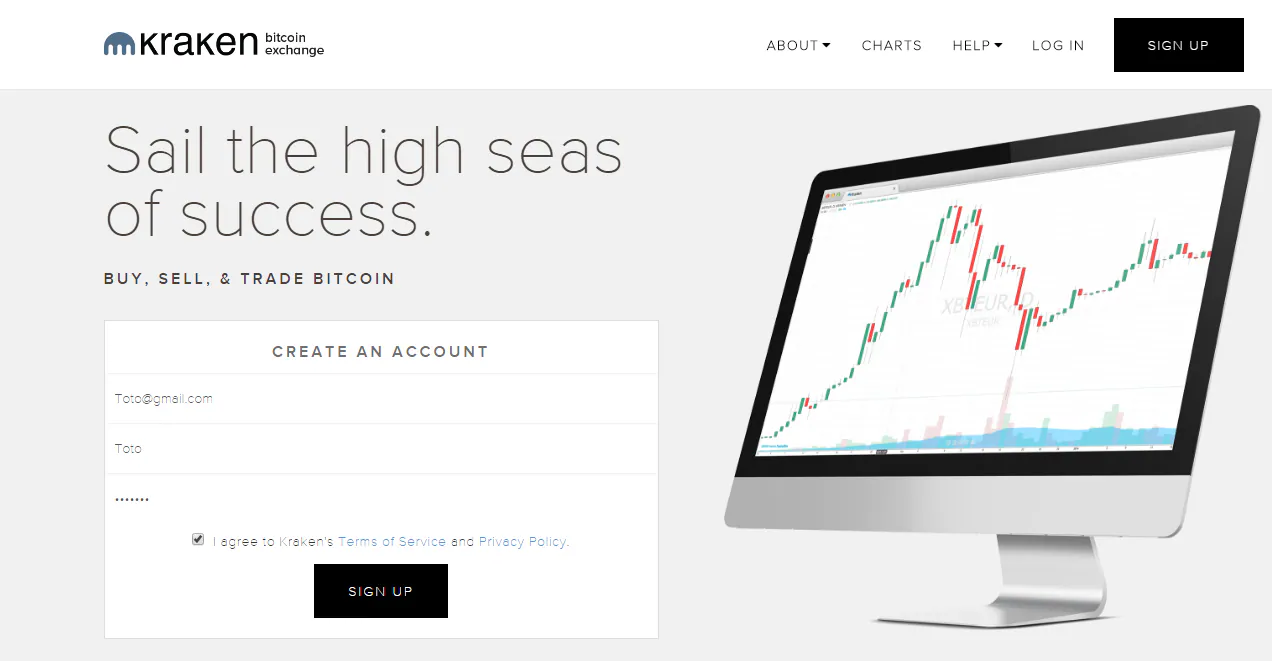

Identification process when creating an account on Kraken.com
Kraken wants to know who you are and where you live, and takes the time to check the accuracy of each piece of information before giving you access to its services. If they wish, they can deny you any access to or use of the platform.
So what’s the difference between Kraken and your bank if this platform behaves like any other financial institution?
Let’s go a little further by trying to project ourselves into our everyday lives.
- Imagine that Bitcoin continues to be liberalised as a legal means of payment and that in France, as soon in Japan, we could pay for our everyday purchases in this currency.
- Imagine that our wallet turned into a current account on which we could schedule regular transfers.
- Imagine that, alongside our stock market investments, our PEA and our PEAL, we put some of our savings into other cryptocurrencies.
- Imagine that Bitcoin’s share of the money supply was no longer 0.1% but 5%.
Wouldn’t these financial platforms then have become the new banking GAFAs, at the cutting edge of the most advanced technologies of the moment (blockchain)? And wouldn’t they be able to buy up the banks, which would be struggling with a digital transformation they find hard to manage?
In the end, financial institutions wouldn’t change, states would stay in their place, and banks would simply have been “blockchainised”, replaced by these platforms which would have extended their scope beyond cryptocurrencies. If we want to be a little provocative, the platforms will find it easier to grasp the issues of traditional banks than the other way round.
Mining also raises questions: it too is in theory totally decentralised, since anyone can “mine” (the act of creating your own bitcoins with your computer) on their own. But “mining” alone on your computer is of little interest, as it’s barely profitable given the hardware investment and energy cost required. The huge progress of mining “machines” and the ultra-competitive nature of the activity have made it almost impossible for individuals.
That’s why, over time, miners have grouped together into mining “farms” or “pools” in order to pool the computing power of their servers.
If we look at the distribution of “pools”, we can see that the top 4 represent nearly 50% of the market, which shows strong concentration, even the beginnings of centralisation. We therefore seem to be heading towards a centralisation of mining pools. What’s certain is that miners working independently have almost already disappeared, which is a paradox for the main players in this decentralised process.
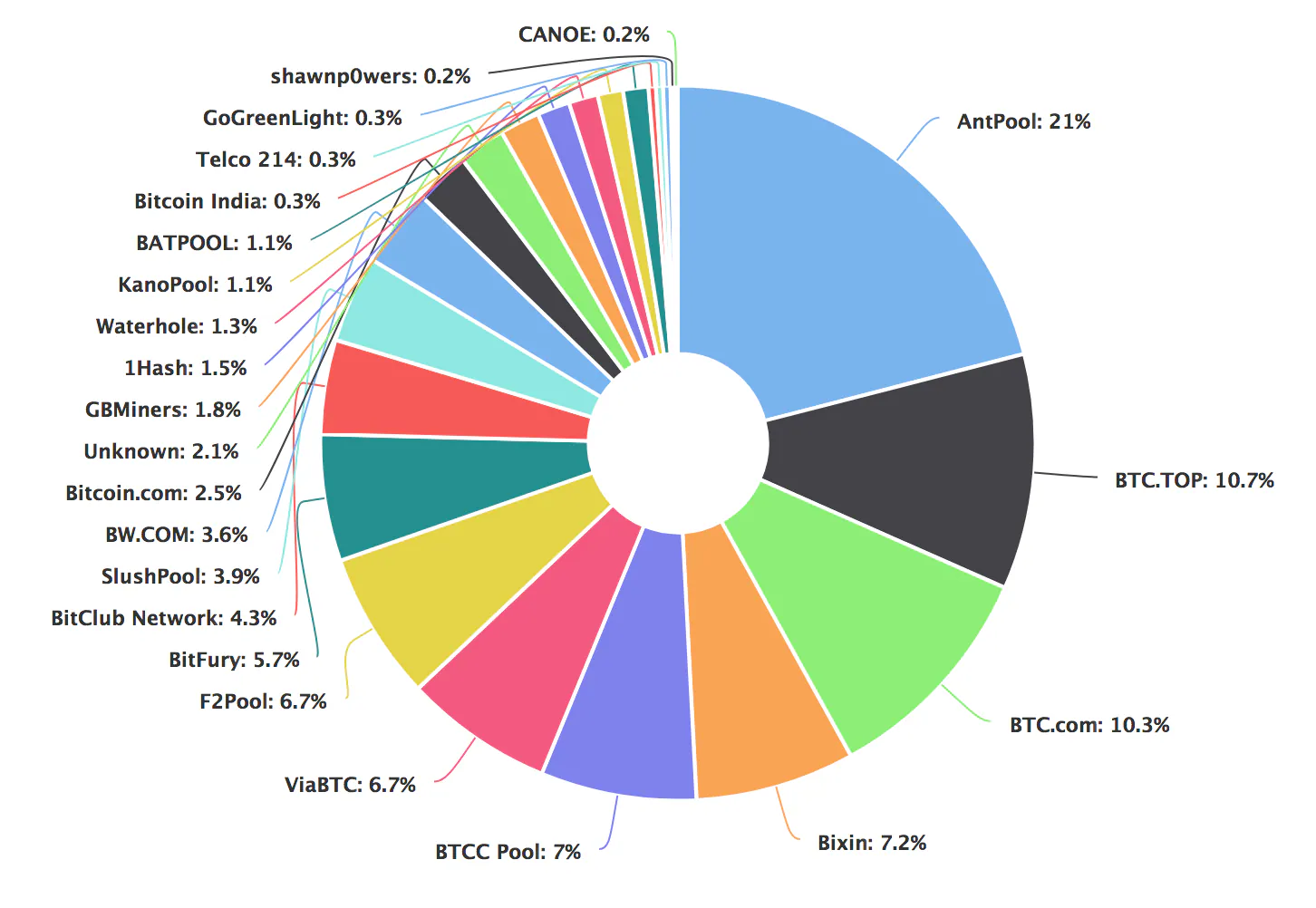
Distribution of mining pools (https://blockchain.info/pools
A question then arises: is Bitcoin’s decentralisation a pipe dream? A bit as if we were selling a product for its fantastic theoretical properties that couldn’t be used in real life. Nice marketing, quite simply!
Let’s not exaggerate, but without talking about centralisation, we seem to be heading towards an ever-stronger concentration of certain components of Bitcoin as it is adopted more widely.
Does Bitcoin’s expansion mean centralisation and its end?
One of the important elements in Bitcoin’s centralisation/decentralisation is how it will evolve as it is adopted by the general public versus the early adopters who hold it today.
We are indeed at a pivotal moment in its life: investment and financing via this currency are growing (e.g. ICOs), adoption by the general public as a means of payment is gradually breaking through (particularly in Asia), and individuals are starting to see it as a way to diversify their savings, so impressive is its financial performance (see our PA’s article, “Bitcoin, an unidentified financial object”).
These developments are forcing states and financial institutions to take a position, and if we look closely, that’s already happening, with positions that keep evolving.
Moreover, these countries’ positions on the rise of cryptocurrencies are far from alike.
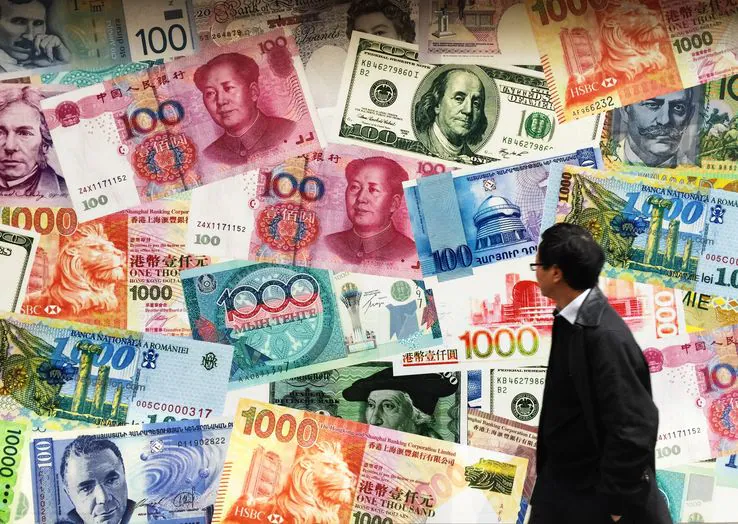
Indeed, while states’ positions had until now been very firm, they tend to be softening in the face of pressure from the “user” market and the tremendous promise these new technologies hold.
On 11 March 2017, the SEC (Securities and Exchange Commission) refused to approve a Bitcoin investment fund (ETF) on its financial market. A Bitcoin-based ETF (exchange-traded fund) would have made it possible to reach a much wider investor audience and, in doing so, to achieve institutional acceptance. The SEC justified its decision on the grounds that the trading systems for this cryptocurrency were not yet sufficiently protected against manipulation, fraud or cyberattacks.
The extreme volatility of the price is an issue, even if it is tending to stabilise (see our article, Bitcoin, an unidentified financial object), and cyberattacks on exchange platforms are no myth. Bitcoin’s past is littered with successful cyberattacks against cryptocurrency platforms such as Bitstamp, Cryptoine and Bitfinex.
And external threats aren’t the only things affecting Bitcoin’s value, as the case of Mt. Gox CEO Mark Karpeles recently showed. The sudden closure of Mt. Gox was initially blamed on hackers. But the former CEO is in fact said to have been at the heart of a fraudulent scheme, although the matter has not yet been fully cleared up.
Nevertheless, it’s important to note that the SEC’s decision leaves the door open to the future approval of a Bitcoin ETF. It states: “The Commission notes that bitcoin is still in the relatively early stages of its development and that, over time, regulated bitcoin-related markets of significant size may develop”.
Russia, which banned Bitcoin in 2014, seems increasingly interested in another currency, “Ether”, and seems to be shifting its position, seeing in it a potential driver of growth through the technologies underlying virtual currencies.
On the sidelines of the St Petersburg Economic Forum held in early June 2017, Vladimir Putin met Vitalik Buterin, the Russian co-founder of Ethereum, the second-largest cryptocurrency after Bitcoin, according to a Kremlin statement : “Mr Buterin described the opportunities offered by the technology he has developed in Russia. The President supported the idea of building ties with possible Russian partners”, the document details.
The Russian authorities are starting to develop a clear interest in this technology. At the St Petersburg Forum, the Deputy Governor of the Central Bank of the Russian Federation, Olga Skorobogatova, revealed that a pilot blockchain project based on Ethereum was under way, Bloomberg reports. A week earlier, the Development Bank of the Russian Federation had approved the use of Ethereum for certain administrative functions.
“The digital economy isn’t a separate industry, it’s the essential foundation for creating new economic models,” Vladimir Putin said at the Forum, while discussing ways to boost Russia’s long-term growth.
With the Russian economy only just emerging from its deepest recession in two decades, Ethereum technology could be a tool for its development and growth. So it’s hard to ban this currency while using its technology.
The case of Japan, which is much more concrete, sheds light on the path many countries will probably take in the future. In March 2017, the country took an important step towards making Bitcoin mainstream by recognising it as a legal means of payment.
The national Financial Services Agency took this decision, which came into force on 1 April 2017. This recognition of bitcoin as a legal means of payment, but not as a currency, comes with much stronger control over access to that very means of payment. Interesting, isn’t it?
KYC (Know Your Customer) procedures are more thorough: platform users must state their profession and their reasons for buying bitcoins, and provide identification documents. The platforms themselves are subject to requirements close to those imposed on banks, namely capital of 10 million yen, proof that their IT systems prevent leaks and losses of funds and personal information, and an audit of their management by an audit firm at least once a year.
We can therefore see that the position of a state like Japan comes with tighter control of platforms and hints at the strategy states seem to be adopting. Behind a seemingly more accommodating stance, we see states’ determination to control this “currency” by controlling flows and access points, since they cannot control the protocols by which it is created.
Of course, one could reply, as we mentioned in the first part of this article, that a user is under no obligation to go through an exchange platform, but it’s clear that the mainstream use of bitcoin by the general public will go through these platforms. The average investor or user will turn to the services or platforms approved by the authorities for reasons of simplicity, “trust” or simply to avoid the risk of finding themselves on the wrong side of the law, the latter remaining an indirect means of pressure that states can use.
Indeed, perhaps in the future the largest platforms will provide more security and guarantee the funds invested, like a traditional bank. These platforms may even become banks or be absorbed by banks.
This kind of “mainstream” adoption could therefore allow states to control most of the flows around this currency while better understanding and appropriating the benefits these technologies could bring to their institutions and their economy (as in the example of Russia).
It’s a bit as if every victory by the promoters (“influencers”) of this technology in getting it adopted by everyone brought it closer to ever-greater control and grip by states and financial institutions. These ever-stronger controls would take us from a decentralised currency, to a concentrated one, and perhaps even to a centralised currency.
Will Bitcoin still be Bitcoin?
Wouldn’t it then become just another financial asset in portfolios, or a conventional currency? Won’t Bitcoin as it exists today die?
This possible evolution would certainly be a problem for the communities around Bitcoin and the ideals they uphold, as it runs counter to the libertarian/anarchist ideas that gave birth to digital currencies. Tools can evolve, even disappear, but ideas and ideals remain.
Will libertarian ideals find expression in alternative currencies to Bitcoin, to reconnect with the dream of decentralisation?

One hypothesis we can outline is that the communities that created Bitcoin and carry its associated libertarian ideas, if they no longer have control over this currency, will create new cryptocurrencies that will take up the torch of Bitcoin as it existed in its early days.
To date, there are more than 700 cryptocurrencies, some of which have much stronger privacy and untraceability features than Bitcoin.
Take Monero, for example, which was created from the outset to preserve users’ anonymity as far as possible and make transactions untraceable. This currency was designed in 2014 by a small group of enthusiasts who wanted to pursue their libertarian ideal and create a currency entirely beyond the surveillance of states and banks.
These same states are suspected by these communities of wanting to abolish cash in order to better control and monitor citizens, under the guise of fighting crime. Cryptocurrencies would then replace cash and become electronic cash. If Bitcoin were to lose these ideals, other virtual currencies would be ready to replace it.
To conclude, we can see quite easily that the conflicts that have always existed around money are also found in cyberspace, with states always seeking more control and citizens always looking for new ways to escape it.
Ideals of decentralisation are always caught up by forces seeking to recentralise them, a phenomenon we already see in today’s internet.
The world of cryptocurrencies seems to be the current extension of cyberspace, its still-virgin territory, where we find the ideals and communities that were present at the origins of the web in the 1980s. Fascinating, isn’t it?