
The Hub blog
UX careers
Every day, we use objects that have quickly become indispensable: smartphones, computers, televisions, that great web we call the internet, the inside of a car, the aisles of a supermarket, and so on. In case you didn’t know, behind each of these products lies a UX strategy. If you’re reading this article so easily on your screens (hello mobile and desktop!), it’s because a talented UX designer cleared the way for you. It’s a practice that has shaped the products and services we use every day, and one that can make or break the success of a company or brand.
UX is a world that’s always on the move, and many people choose to build a career in it, so fascinating and stimulating is its evolution. If you want to break into this field, there’s plenty to learn, and it calls for a very diverse set of skills.
Not only is it a professional role that’s constantly evolving, it’s also one that’s never the same from one company to the next. To handle the entire design process of a product or service, a small business may bring in a single UX designer, whereas a large company may need a whole team.
Knowing that, how do you find your way around? Do you need a full team or a single UX designer? To help you answer, we’ve broken UX down into five main roles: UX researcher, UX writer, UX designer, UI designer, UX architect.
There’s also a sixth — of a rather mythical nature — which we’re saving for the end of this article.
To give you a better introduction to this fascinating world, we called on Levent Ozata, who has been a UX research expert for many years.
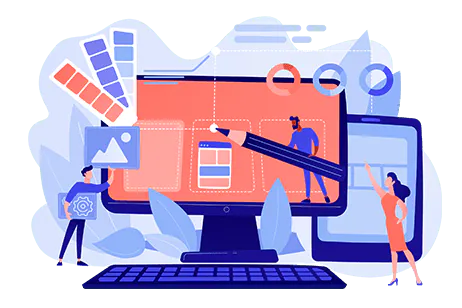
UX designer: user experience
“UX design is the way you design a product or a service in every possible way so that the user can use it without any friction, like a natural extension of a person’s body or mind,” Levent replies.
To understand all this better, let’s go back in time to the days of the 1990s.
It all started with Donald Norman, a psychologist and cognitive scientist, when he walked through Apple’s doors as the very first “UX designer”. Interested in every aspect of the user experience (industrial design, graphics, interface or physical contact), he coined the term “UX design” to represent all the feelings a person could have when coming into contact with a product or service.
People hold a crucial place in UX design, because everything depends on their interaction with everyday products and services such as websites, apps and even coffee machines. It’s an extremely varied discipline, combining elements of psychology, business, market research, design and technology. It can range from the feel of a physical product in your hand to the simplicity of the checkout process when you buy online. The goal of UX design is to create experiences that are easy, efficient, relevant and enjoyable for the user.
By combining the different aspects mentioned above, the UX designer builds a bridge between a company and its customers’ needs. When you think about it, the UX designer would make a great viaduct.
UI designer: user interface
A few quick clicks around the internet are enough to realise that UX is often intertwined with UI. The two terms are frequently used together (in fact, a UX designer usually wears the UI designer hat too), but that doesn’t mean you can lump everything together.
UI refers to the actual interface of a product, such as the look of a smartphone or tablet screen. It covers all the visual and interactive aspects, from typography to the colour palette or navigation buttons.
While UX focuses on the problem a user encounters, UI focuses instead on how the product looks and works. If we wanted to push it further, we could even say that if UI had been a person, it would have refused to wear socks with sliders, because talk about a fashion faux pas.
UX researcher
“A UX researcher is essentially the voice of the users, so when producing or designing an app, a service or any product at all, you create it for the user. UX research is therefore a set of tools we use to make the user’s voice heard within the design process.”
A great product often starts with great UX research! UX also involves a huge amount of research and data interpretation. That’s rather the UX researcher’s pet subject: they focus on analysing this data while carrying out research to better understand the target users.
It’s a role that requires excellent communication skills, as well as the ability to decipher qualitative and quantitative user data, as our expert explains: “Generally with quantitative questions, we try to answer the ‘what’ question, and with qualitative questions, we try to answer ‘why’.”

UX writer – copywriter
“There are tons of ways an app speaks to you: sometimes it fits your culture, your expectations, who you are, and other times it doesn’t, because it wasn’t written for you.”
Just like the visual side, the text of every interface must be designed. A UX writer’s role is to write all kinds of text for apps, websites and other digital products. They’re the ones tasked with finding the right words for content known as “microcopy”, such as menus, definitions, buttons, labels, chatbots or error messages. A good UX writer has a knack for creating microcopy that’s highly intuitive for any user, without straying from the voice of the brand they work for.
“It’s about much more than creating content or just the aesthetics of a text. At the heart of this role, you speak to the user in the best possible way, in both design and content.”
UX Architect
As you know, it’s captivating content that attracts new visitors! But that content still has to be easy to find.
That’s the role of these “information architects” (a pretty classy name), who carry the heavy responsibility of organising the whole flow of information deemed useful to users.
They spend their time structuring content so that users can easily find what they’re looking for. To do this, it’s essential to research what users need in order to create an effective information architecture.
To make sure their work is easy to understand, they’re responsible for creating prototypes and wireframes, after taking part in interviews and surveys to gather as much essential information as possible.
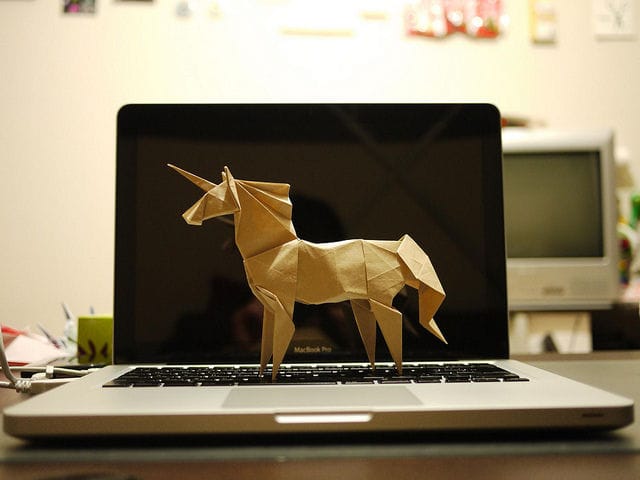
Last but not least: the UX unicorn
It’s a unicorn because it’s a rare creature among UX designers! It’s something of the generalist of UX, as it excels in every aspect of the field. These unicorns are highly sought after for their ability to handle all kinds of work, from design to graphics and coding. You may ask: is there anything they can’t master? Without a doubt, the dark side of the Force.
Not many people can be called UX Unicorns, because it takes a long time to master everything in the field of UX design. And it’s not everyone’s cup of tea! Even so, it’s rather valuable to have such people leading a UX design team (because yes, they’re also known for their leadership qualities).
As you’ll have gathered, everything related to technology is constantly evolving. UX is no exception, and Levent predicts that a new role will soon emerge: “What I’m realising is that video testimonials help people really understand the voice of users, so maybe that could lead to a job that combines video production and UX design.” All that’s left is to wait for a job posting on LinkedIn titled “UX producer”.
A mastery of UX is essential to the success of your product and your company. By putting your target audience’s needs at the heart of your design, you’ll end up with loyal customers who’ll sing your praises.
If you feel lost in this field, don’t worry: Dgitags is here! If you already have an idea of what your customers expect, get in touch with Chrystal Robet-Tamborini, talent agent, who can point you towards the right UX role.