
The Hub blog
How to prepare for a freelance interview
Have you recently started freelancing in a digital field and are about to interview for a very specific engagement, but don’t know what to expect?
If so, this article is for you!
Read on ;)
How do you prepare for your interview?
It may seem obvious, but every professional interview needs to be prepared in advance.
First of all, find out about the company and the engagement you’re applying for. For example, go to the company’s website or social media and take a look at its history, values, competitors or even its teams.
It’s essential to be well informed so that you can quickly establish a quality conversation with the person you’re speaking to.
You can also prepare an introduction pitch of 2-3 minutes maximum so that you’re ready to present yourself concisely and precisely.
As a freelancer, you’re coming in for a specific need, so don’t try to set out all your professional experience in your pitch. Focus on the experience that’s relevant to the engagement you’re applying for.
How does a freelance interview work?
First of all, you should know that the selection process for freelance interviews is generally shorter than a traditional process. A company looking for freelancers wants things to move quickly, since it’s looking for someone for a specific need. The timing is therefore tight.
At the start of the interview, some time will be set aside for a brief introduction from both sides. This is the moment to deliver the pitch you’ve prepared.
Once the introductions are over, the client may ask you fairly standard questions about:
- Your day rate,
- Your past professional experience, to get more detail and concrete examples to back it up:
- For creative roles (e.g. UI designer), the client may take a look at your graphic style by looking at your portfolio, for example,
- For more technical roles (e.g. web developer), the company may ask you how many projects you’ve built on WordPress to gauge your level of expertise,
- For management roles, it’s your similar experience in the sector that will interest the client.
- Timing: when can you start? How much time will you be able to dedicate to the engagement? etc.
- The engagement: how do you approach it? Which skills do you think will be useful to meet their need? Have you already done a similar engagement? etc.
The company is also likely to take some time to go over the engagement in detail again and re-explain what it expects from the freelancer. Use this time to make sure you’ve fully grasped the engagement’s challenges and the objectives being targeted.
In addition, depending on the selection process, you may have a case study to complete. For example, if you’re applying for a freelance developer role, the client may ask you to carry out a quick audit of their site and then give them a few recommendations for improving it. Another example: if you’re a traffic manager, you may be asked to look at one of the company’s past Google Ads campaigns and give your opinion.
What are our tips for a successful freelance interview?
Be proactive with ideas:
Throughout the interview, be efficient and agile, and respond to the client’s specific need. Don’t waste time — get straight to the point. Your interviewer presents the need/problem; you have to be the solution.
Show them how you organise yourself:
Your interviewer will try to understand how you work and how you organise yourself. As a freelancer, you often work remotely, so you need to reassure the client.
Show your expertise:
As a freelancer, you need to show that you’ve mastered your subject and that you’re an expert. For example, learn to showcase your past professional experience so that it matches the engagement you’re applying for. Show them your skills in concrete terms by explaining what you would do if you were chosen for the role.
In reality, the company only wants one thing: for its needs to “match” your skills.

Ask questions:
During your interview, don’t hesitate to ask questions so the client can see your interest in the engagement and the company. For example, if you’re a freelance web developer, ask the person you’re talking to which teams will be working on the web project with you, so you can gauge your level of autonomy, or make sure you ask as many questions as possible about the work that has already been done upstream, which code tests have been put in place, how bugs are tracked, etc.
So don’t hesitate to bring up practical points to better understand what’s at stake and get a clearer overall picture, so you avoid nasty surprises during the engagement.
Stay calm:
Even though interviews can be stressful, you need to come across as calm and confident. To do so, it’s best to be well prepared by anticipating the questions that may be asked. Unfortunately, if you’re too stressed, it won’t reassure the client, who might, for example, imagine the consequences of that kind of behaviour during the stressful moments of the future project.
First impressions are therefore essential.
Sell yourself:
You need to learn to communicate about yourself, presenting information in the most commercial way possible. Knowing how to sell yourself means understanding the client’s need and reframing it while bringing your own added value.
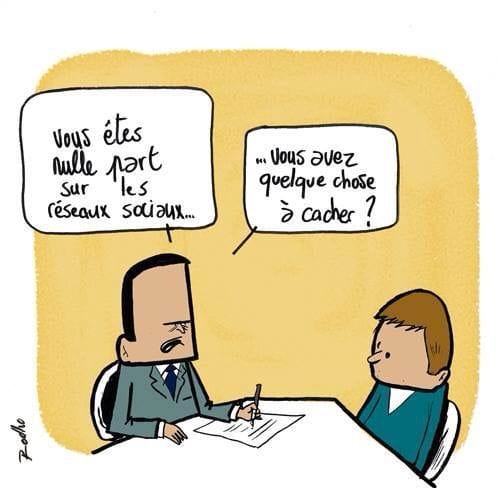
For example, before the interview, it’s important that your social media profiles are up to date and regularly fed with quality content. The client will form a better opinion of you from the outset if your image on social media is positive. It is, in a way, a shop window. During the interview, focus on the experience that’s relevant to the engagement and show interest in the company.
If you land the engagement, still make sure you wrap it up properly, because the business world is small. Freelancers are their own company, so take care of your image — it’s your calling card, in a way.
To sum up these few tips, don’t forget that you’re coming in for a specific need. You don’t know the company culture, so find out about it, and show interest in the engagement while remaining proactive with ideas.

Interviews at dgitags? The agent approach
Our interviews follow the format described above. So there’ll be no surprises!
Prepare for your interview by finding out about dgitags.io and think about a short 2/3-minute pitch to introduce yourself. Get to the point by focusing on the information and skills that will be useful for the engagement.
During the interview, we’ll ask you questions about your professional experience to see whether your expertise matches the engagement’s objectives and needs.
At dgitags, what makes our selection process special is our agent approach!
We really try to get to know the freelancers we represent in order to build a relationship, which makes our projects more reliably successful. We put our clients in touch with freelancers who share the same values and the same vision. We bring a genuinely human dimension to the selection process. We also look for freelancers who are autonomous, experts in their field and proactive with ideas. The key is to find a freelancer who matches the engagement on offer.
That’s already the end of this article. Nevertheless, the dgitags.io team hopes you enjoyed it and that it has given you a few tips for preparing your interview. Feel free to take a look at our blog.
If you’re looking for a good freelancer in SEA, SEO or product management, contact Donutz Digital who will support you in France and internationally!
Sources: