
The Hub blog
How to turn hiring trends to your advantage
The world of hiring is constantly evolving and has to adapt to what talent expects! According to a study by the consulting firm Deloitte, finding qualified talent has become the number one threat for 73% of business leaders. Finding and hiring candidates who are increasingly demanding is a job in itself. This is what’s known as “the war for talent”: a job market where companies compete to unearth the most qualified people.
Technology is without doubt the main driver of this change. It has shaped this year’s hiring trends, and probably next year’s too. In a fast-changing, technology-driven world, talent acquisition teams will inevitably lean on virtual tools.
On top of all this comes the post-coronavirus era, which keeps us at home. More than ever, we have become dependent on technology to entertain ourselves, do our shopping and now work. Even though many professionals and sectors still see technology as a threat to their roles, 54% of HR talent specialists see it more as an opportunity.
With all this context in mind, we called on Chrystal Robet-Tamborini, talent agent for Dgitags, and Louis Deslus, a “Growth Marketing” influencer, to shed light on the best way to hire!
Transparency
This first trend is about hiding nothing — not even the company’s financial and strategic information — from staff, whatever their level in the hierarchy.
“We’re going to see more and more companies displaying the salary, the conditions, and the whole application process, completely transparently.” Cards on the table! The aim is to build immediate trust between staff and the company brand.
👉 Chrystal’s tip
“It makes us more efficient and shows the candidate how serious we are, and that we’re not trying to push their cost down as far as possible.”

Remote work
If hiring were a competition, this trend wouldn’t be leaving the podium any time soon. If the last two years have brought change to the work environment, they have turned the world of jobs and hiring upside down. The pandemic was a time for reflection for companies and talent alike. Nearly 98% of workers now ask for the option of working from home for at least part of their working week. Where we used to fit personal life around professional life, it’s now the other way round. The result: extremely demanding candidates, and companies struggling badly to hire.
👉 Chrystal’s tip
“The best profiles, especially developers, are 100% remote! When a company contacts me looking for certain profiles, I advise them to increase the percentage of remote work. It also means you can reach developers all over the world, because there are no more borders!”
Supporting talent
Thirty years ago, a salary would have been enough honey to catch the flies. Today, an entire HR policy is put in place — a game of seduction that involves “supporting this talent”, explains Louis Deslus. The hiring manager will give it their all to win over a candidate who only wants to be pampered. Every argument counts! “Access to a new health insurance plan, that trendy meal card, a gym pass, and so on,” adds Louis. It’s no longer up to the candidate to give reasons to be hired, but up to the company to ask them to stay.
👉 Chrystal’s tip
“That’s what my job as an agent is all about, because it’s about putting people at the heart of it all! I work hard to offer missions that are meaningful, I work with freelancers over the long term, and that helps missions succeed on both the client side and the talent side.”
Non-technical skills
According to a LinkedIn study, 89% of bad hires often lack basic soft skills such as collaboration, teamwork, creativity, adaptability, persuasion and time management.
Identifying these skills has always been a huge challenge for hiring managers. That’s why the assessment process needs reorganising, with an emphasis on these non-technical skills alongside the technical ones.
👉 Chrystal’s tip
“You can’t overlook soft skills! I make sure there’s a real match between the candidate and the hiring manager, and that’s where I show empathy, to understand who my clients are and what they expect.”
Gamification
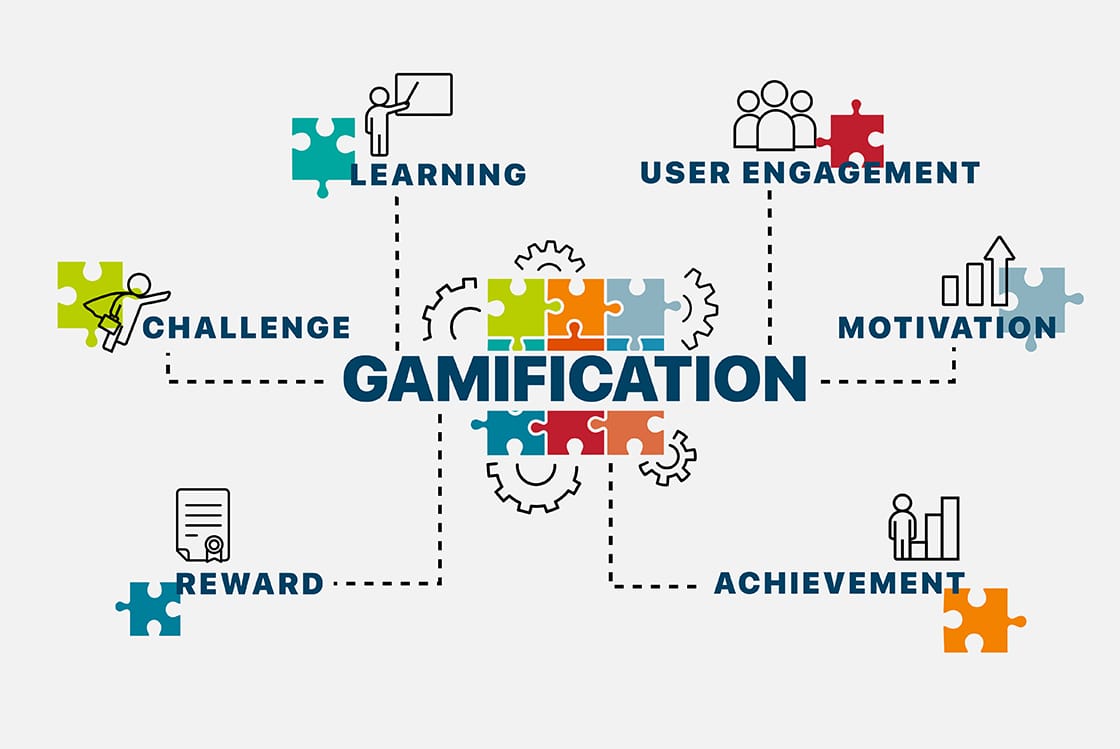
This trend is about keeping candidates engaged throughout the whole hiring process. It’s called gamification, and according to Louis, it means “making the application experience fun — it’s going to be machine learning”, with the aim of analysing a candidate’s behaviour.
Gamification seeks to hold a candidate’s interest through the many stages of the hiring process. Anything goes when it comes to selecting and motivating candidates, and games are an excellent way to do it.
👉 Chrystal’s tip
“It’s ideal for hiring somewhat tricky profiles, especially in tech, so gamification lets you tap into a new talent market.”
Growth Recruiting
Another hiring trend is “Growth Recruiting”, or talent marketing. Louis’s area of expertise, it is “quite simply applying marketing techniques to hiring”. It involves bringing conventional marketing strategies (inbound and outbound) into the hiring procedure; just like marketing, the goal is to make companies known in order to attract candidates.
👉 Chrystal’s tip
“It’s what I do every day; I do it constantly for hiring campaigns to broaden my pool of candidates.”
Crazy about data
A data-driven strategy is one of the latest trends in hiring. It marks the start of an era of data-based talent acquisition, a role of growing importance. Thanks to certain metrics, hiring managers can now spot the best candidates much more easily. Using artificial intelligence and databases full of information on an individual’s performance, it’s now possible to predict how well a candidate fits the position a company needs to fill.
👉 Chrystal’s tip
“I use our Dgitags platform internally, because everything is indexed with very relevant keyword searches.”
Hiring on social media
Since the start of the pandemic, more and more people are active on social media. Many companies now use it to interact with candidates both during and outside hiring processes. Social media showcases company culture, strengthens the company’s brand as a place to work, and so helps create a strong value proposition for interested candidates.
👉 Chrystal’s tip
“I showcase my talent a lot on LinkedIn, through posts or carousels shared with my 3,000 professional connections (decision-makers, CEOs and talent influencers).”
Artificial intelligence
This trend isn’t leaving the podium any time soon either. Many companies are counting on artificial intelligence to optimise their hiring tactics. In the HR tech ecosystem, AI has become a fundamental tool for overcoming hiring problems. Built directly into the ATS (Applicant Tracking System), AI’s role is to automatically filter thousands of CVs and cut down on time-consuming manual tasks.
Artificial intelligence is all well and good, but for Louis, “it has to be a human affair. The hiring manager must always be involved in the hiring process and not let tech decide their place — and I’m someone who helps hiring teams automate their process!” he adds. “Tech should help us become more productive, and let us reach ever more people.”
👉 Chrystal’s tip
“There’s something called Boolean Search, which lets us refine our candidate search using specific operators on databases such as Google, LinkedIn, various ATSs and CRMs…”

Internal hiring
For many organisations, internal hiring has become a major strategy for finding talent, especially as it considerably reduces hiring costs and also improves staff retention. LinkedIn data shows a 10% increase in internal hiring since 2015.
Finally, it’s also about giving HR good advice.
For Chrystal, there’s a whole set of interpersonal skills in a company, and it’s essential to advise HR well on their hiring policies.
-
Encourage e-presenteeism: it’s like presenteeism but online, and it’s a new phenomenon resulting from remote work. A recent survey by LinkedIn and the Mental Health Institution shows that four out of five HR managers think working from home encourages e-presenteeism. You might say they’re going to great lengths, but 86% of workers feel they have to prove to their bosses that they’re working hard and deserve to keep their jobs.
-
Hire without forgetting equity, diversity and inclusion! “HR can’t overlook this today,” Louis says enthusiastically! A candidate will favour a company with a very fair HR policy, check whether the gender pay gap is addressed, and verify that there are no accounts of racism or homophobia online. Louis tells us about a great tool, Figures, “which lets you see whether you’re paying your staff well enough compared with market averages, whether you have a good internal policy between men and women, a fair distribution of salaries, and so on.” According to the World Bank, gender equality at work is a value that could boost the global economy by more than 140 trillion euros. Added to this is ethnic and gender equality, which represents a 33% increase in profitability.
As you’ll have gathered, the world is constantly changing, and companies absolutely must find a way to hire quickly and well. Hiring continues to evolve at lightning speed, so don’t hesitate to contact Chrystal so she can meet your hiring needs!